Research stay
Our researcher Anna Wallays is honing her analytical insights through collaboration with sociological researchers from ANSIRH, which specializes in abortion.
The ANSIRH research group is located at the University of San Francisco in California. During her research stay, she will have the opportunity to collaborate with experienced and specialized researchers in the field of abortion and broader reproductive health. The insights of researchers active in a context where reproductive rights are systematically being overturned provide new and valuable perspectives.
She already had the opportunity to present her work to the research team, attend group meetings and a guest leacture. Further, she will work together with Katrina Kimport on the final paper of her doctoral research, an observational study of intakes at the abortion center.
-
 ANSIRH
 -
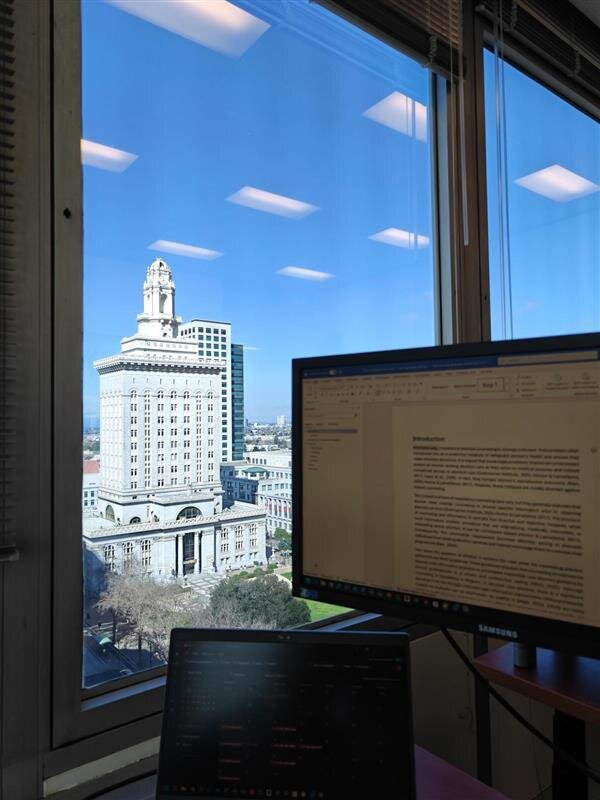 Oakland office
 -
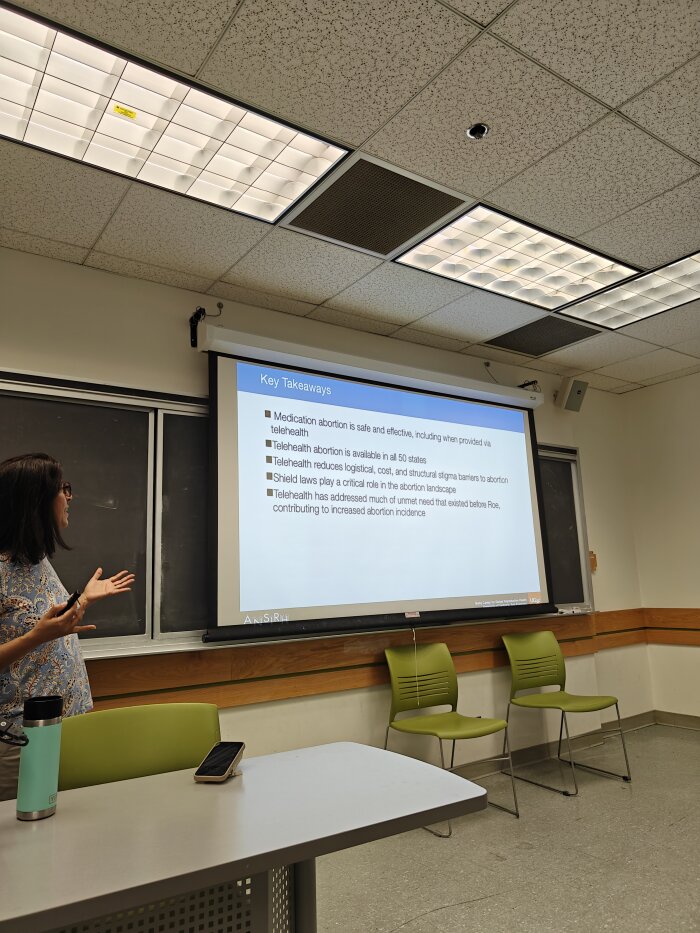 Guest lecture by Ushma Upadhyay
 -
 Notes on telehealth abortion
 -
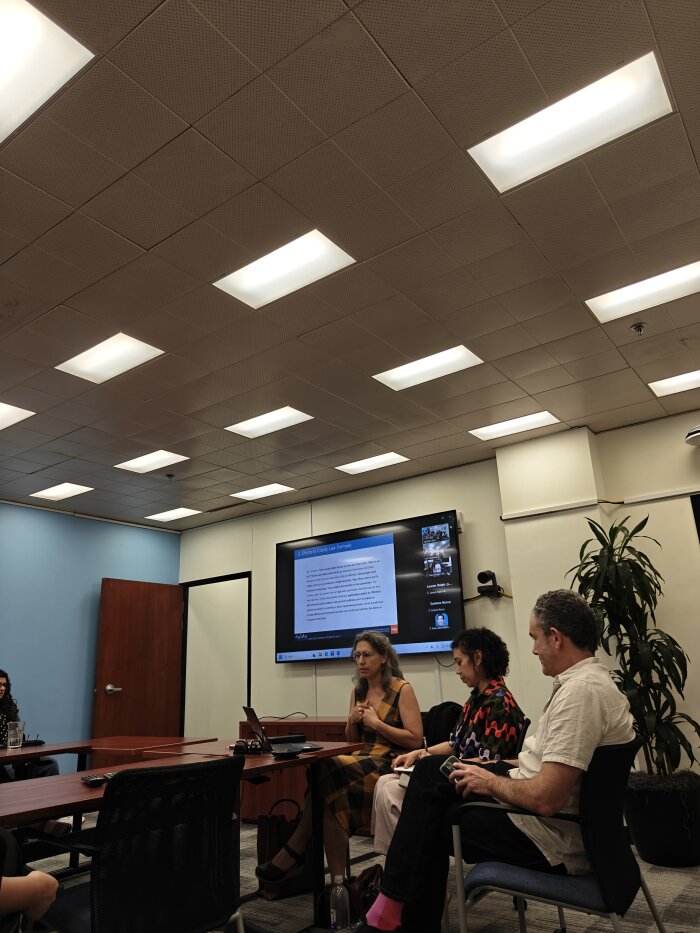 ANSIRH work in progress meeting


The paper presenting the qualitative findings of our research project was published in Social Science and Medicine - Qualitative Research in Health!
Although extensive research has been conducted on abortion trajectories and associated barriers in the UK and the US, no such studies have been conducted in Belgium. The country nevertheless presents a unique case: each year, between 200 and 600 women are denied abortion on request due to the gestational age limit. This raises fundamental ethical and legal questions that fuel ongoing public and political debates about extending the legal limit for abortion care and revising the mandatory waiting period. To inform these ongoing policy debates, it is essential to situate abortion trajectories within the broader social context of Belgium and to explain the occurrence of delays in such trajectories. We conducted qualitative interviews with 29 women who had completed an intake consultation at a Dutch-speaking abortion center in Flanders or Brussels. Proceeding from a constructionist perspective in analyzing the qualitative data, we aimed to build representations of multiple lived realities. Our findings demonstrate that abortion trajectories do not proceed in a linear path, but are constructed through the complex and multi-layered processes of pregnancy awareness and decision-making on abortion. These trajectories are shaped by a dynamic interplay of pre-existing perceptions, structural factors, and personal experiences, rather than following a straightforward, linear path to abortion care.
The Dutch-language research report of the ATTAS project was published!
In light of the current social and political debate about a possible revision of Belgian abortion legislation, there is a growing need for empirically based insights into how women actually experience their pathway to abortion care. This research report offers an insight into these trajectories.
👉 Read the full report here (in Dutch only)
The study protocol of the ATTAS project has been published in Archives of Public Health!
This paper provides a detailed overview of the various steps of the quantitative data collection, including the questionnaire development, sampling, and recruitment strategy. As well as the recruitment strategy for the qualitative data collection.