Discover the BUGS project
Background
Urban green spaces, such as parks, are good for human health for many different reasons: they help us relax, cool the air in summer, and improve our overall well-being. Furthermore, they connect us with nature and biodiversity - two vital elements that many urban people have little contact with. There is also a hidden benefit that you may not have heard about: tiny microbes that live in urban green spaces - the “bugs” that inspired our project name!
Scientific ideas such as the Old Friends hypothesis and the Biodiversity hypothesis suggest that contact with diverse natural microbes (the “old friends” humans lived with in hunter-gatherer times) helps train and regulate our immune system. This may lead to fewer allergies, asthma, and other immune-related diseases that are very common in urban areas. We believe that urban green spaces such as parks may provide a home for these beneficial microbes.
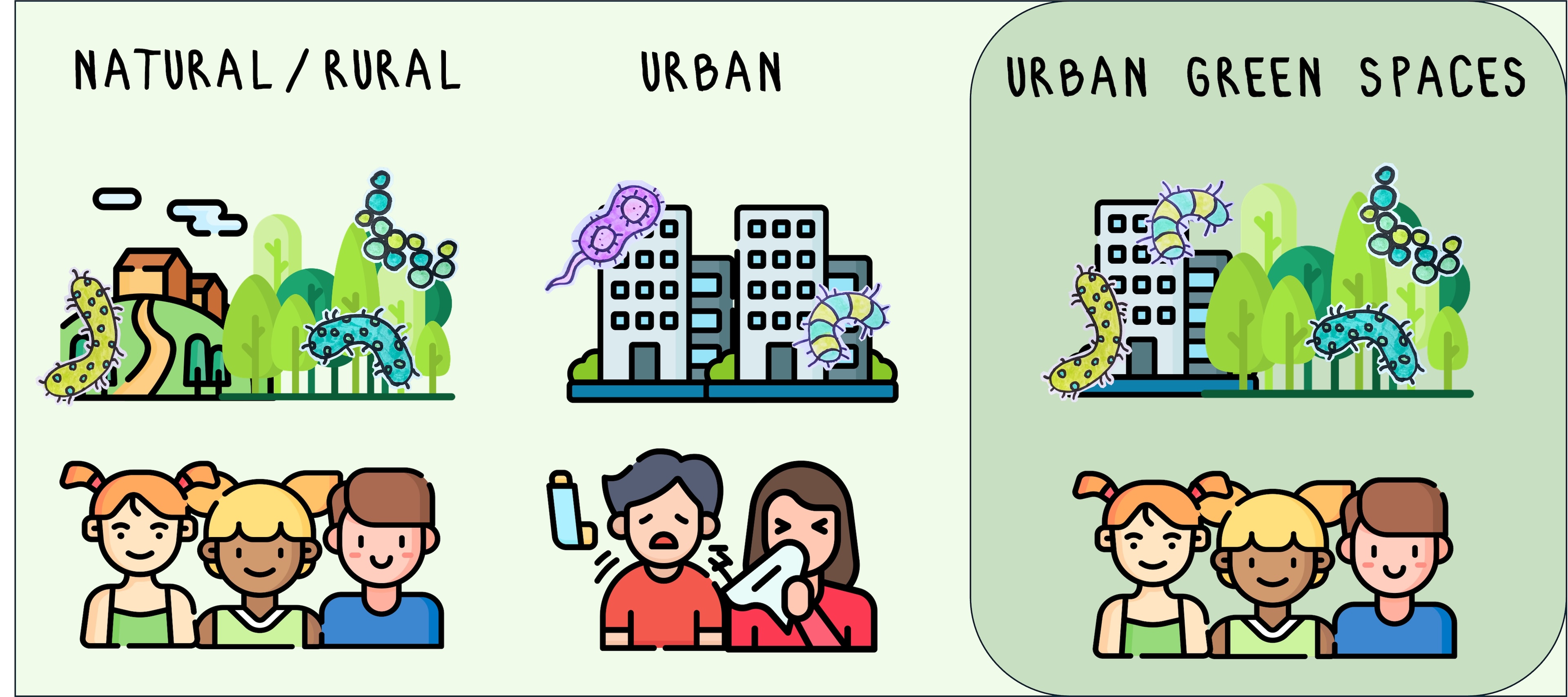
In the BUGS project, we carry out citizen science studies to explore whether urban green spaces contain diverse microbes that may support our immune system. With these studies, we explore which microbes can be found in urban green areas, how we interact with them (for example, while walking or playing in the park) and how this contact might train our immune system.
On this website, you can find out more about the different BUGS initiatives, current news and results, the research team behind the project and opportunities for participation.
Citizen science in action
We believe science works best when people are actively involved. Citizen science is an approach in which people who are not professional scientists take part in scientific research, for example by contributing ideas, collecting data, or reflecting on results together with researchers. It allows us to bridge the gap between academia and society, making research more inclusive, accessible, and meaningful. By involving citizens directly, we not only collect valuable data, but also foster a stronger connection between people and their local green spaces. Through active participation, we aim to empower communities and ensure their perspectives help shape healthier, more inclusive cities.
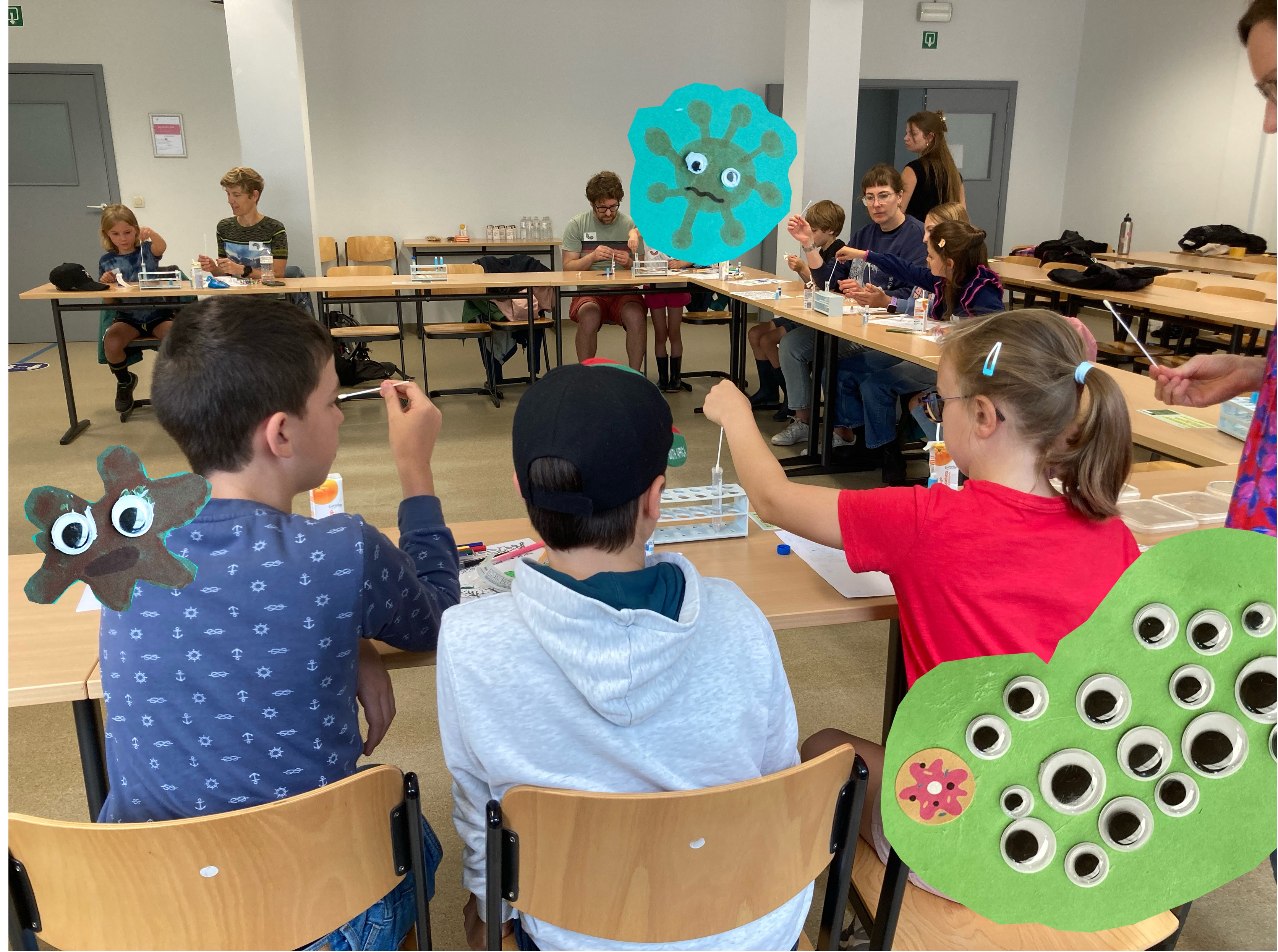
The first BUGS microbiology workshops, which started in 2024, focused on families with young children. It was the first step in exploring how microbes transfer from the park environment to humans in real-life situations. During these workshops, children and parents collected their own skin and nose samples before and after playing for one hour in the park.
They also took part in hands-on activities to learn about microbiology, the importance of urban parks, and their microbial and general biodiversity. If you want to find out more about these workshops, follow this link.
BUGS initiatives
In addition to the BUGS workshops with families, we are developing several initiatives to explore microbial transfer from urban nature to humans in different settings, as well as people's relationships with green spaces.
In the BUGS@school project, we organize workshops with primary school children from collaborating schools to empower them as young researchers. Children will learn about microbiology, urban nature, and human health, while actively helping to design the study and collect microbiome samples. If you want to find out more about this initiative, follow this link.
A key goal of the BUGS project is to include children and other vulnerable groups that may benefit the most from contact with urban green spaces. Although parks are beneficial, not everyone has equal access to them. This is why, alongside our microbiology research, we also explore the social dimensions of urban parks in the BUGSxUrbanDesign project: Who can access them? What barriers exist? What do different groups need and expect? And how can we increase public support and engagement with park biodiversity? To address these questions, we launched several initiatives. From 2024 to 2025, we conducted an online survey asking citizens about their preferences, limitations, and concerns related to urban green spaces. We also organized a workshop with families with young children, where we gathered insights through playful activities and games. Building on this, we will explore children’s preferences for physically interacting with parks within the BUGS@School project.
With all these efforts, we aim to identify key challenges and potential solutions for urban green design. Our vision is to help create urban green spaces that are free, inclusive, health-promoting, and accessible to everyone.