#1 Supermarket as Public Stage
By Johanna Roth

The supermarket is one of the most frequented architectures of our time, an everyday stage where belonging is continuously negotiated. Both intimate and anonymous, local and global, commercial and communal, it structures routines, desires, and encounters. This workshop re-appropriates the supermarket as a multi-layered spatial construct, asking: How can we reframe its logics of circulation, display, and ritual? How can longing transform consumption into connection?

Rather than designing solutions, the workshop embraces the supermarket as a paradoxical site.
Through mapping, re-staging, and performative experimentation, students will uncover hidden structures, routines, and exclusions that shape belonging. By shifting the lens from problem-solving to problem-finding, we ask: What social desires and longings lie beneath the surface of consumption? What spaces of encounter are overlooked, what rituals forgotten? The aim is to generate awareness and speculative possibilities rather than definitive answers.
Antwerp, with its historic role as a trading hub and one of Europe’s largest ports, is a city where global and local scales intersect. Flows of goods and food arrive through its port before reappearing in supermarkets. The supermarket becomes the everyday echo of the port, where planetary logistics are translated into shelves, aisles, and shopping baskets. Situating this workshop in Antwerp highlights how belonging is entangled with histories of trade, migration, and cultural exchange, as well as with the intimate act of shopping for bread, spices, or rice.

The approach is interdisciplinary, combining architecture, art, and performance. Methods include spatial mapping, speculative prototyping, and ephemeral interventions, alongside performative exercises using food as scenography. Food here is not only sustenance, but a cultural signifier and socialcatalyst. Over the week, participants will transform the supermarket into a space of imagination, culminating in a public dérive where the supermarket becomes both exhibition and stage, collapsing the boundaries between shopping, meeting, and performing.
#2 Traces of Belonging
By Marianna Moskal & Bartosz Teodorczyk
While belonging is often discussed in terms of people or communities, this workshop shifts the focus toward places themselves. What does it mean for a place to belong, or to evoke longing? Many contemporary spaces - airports, waiting halls, shopping malls, vacant lots - appear anonymous, interchangeable, and seemingly belong to no one. Drawing on the theory of non-places (Augé), we explore how these environments generate both alienation and longing, and how subtle traces of everyday life reveal forms of fragile, relational, and temporal belonging.

The workshop unfolds in three stages. On the first day, Spaces of Longing, students explore and document anonymous or neglected spaces, focusing on atmosphere, absence, and emotional resonance. On the second day, Traces of Belonging, they return to these sites to record subtle signs of presence and use: marks, objects, wear, or gestures that reveal how the spaces are informally claimed. During the following days, Physical Interpretations, they translate these observations into tangible installations: 1:1 collages, scenographies, or objects that materialize and reinterpret the traces of belonging through spatial and material expression.

This search concludes with a visual survey presented as an exhibition, where each group’s intervention occupies a dedicated “pocket space.” Each scenography evokes the atmosphere of the observed site, offering a unique interpretation of its traces of belonging, while collectively the five works form a cohesive narrative. The exhibition transforms ordinary, overlooked, or seemingly anonymous spaces into tangible, experiential stories of belonging and longing. By amplifying subtle, ephemeral gestures into 1:1 physical interventions, the final presentation creates a strong visual and spatial impact, inviting visitors to encounter the hidden life of spaces in an unexpected, memorable way.
The aim of the workshop is to show that even the most mundane and neglected spaces belong to someone - human or non-human agents - and are places where rituals are performed every day. Together we will learn how to carefully observe, recognize the identities of spaces, and interpret them visually.

#3 Form-Ritual: Storyboard of Belongings and Collectives
By Jang Hee Lee & Ania Trần
The word belong, from be (“around, thoroughly”) + longen (“to reach, to yearn”), originally meant to go along with. It presupposes relation to a collective larger than oneself. Belonging has a dual meaning: as emotion, an affinity with a place or community; and as object, a person’s movable possession. Yet not every possession always become a belonging tied to a collective subject. Smart-phones, for example, embody contradictions: tethering us to global networks rather than place, yet also serving as tools of solidarity, from Tahrir Square to Hong Kong, where individual devices were crucial in organise protests.

This workshop invites participants to find a moment, or Form-Ritual, where personal objects resonate between place and collective subject. The storyboard is our method: a 5x5 grid on A1 paper that sequences how forms and rituals construct a sense of belonging. Participants will draw from their immediate surroundings, objects found on Antwerp’s streets, fragments of urban life, or personal items carried with them, to anchor belonging in the here and now.

The format opens itself to interdisciplinary contributions: an architect’s axonometric, an artist’s collage, a product designer’s exploded view, a heritage scholar’s archival trace. Photography, sce-nography, digital tools, and performance documentation are equally welcome.
The workshop unfolds in three phases:
1. Collect & observe objects and rituals of belonging.
2. Translate them into storyboard sequences.
3. Assemble the grids into a collective atlas—a patchwork where individual frames interlock into a shared choreography of belonging.

Our aim is not to propose utopian worlds, but to work critically with the world as it is—revealing latent conditions, questioning frameworks, and speculating on new spatial logics. The storyboard thus becomes both analytical and performative: a tool for constructing, sequencing, and sharing spatial imaginaries that oscillate between representation and reality, between what we belong to and what we long for.
#4 Cartographies of Care: Threads of Loss, Stitches of Healing
By Liza Goncharenko

This workshop invites students to collectively embroider a large-scale textile map of Ukraine, tracing the invisible wounds of invasion: ecocide, burned forests, poisoned rivers, and scarred soils. Each participant will work on one fragment of the map, creating a patch that reflects a layer of ecological trauma and potential recovery. At the end of the week, the embroidered fragments will be stitched together into one collective tapestry, a material act of care and belonging.
The workshop combines collective craft-making with theoretical reflection. Each day begins with a short reading circle: texts by Anna Tsing (The Mushroom at the End of the World), Darya Tsymbaliuk (Ecocide in Ukraine), Solomiya Magazine (Environmental Issue), Pascal Gielen (Passivity), and Emanuele Coccia (The Life of Plants), which frame embroidery as both a slow, attentive craft and a form of political resistance. We discuss how practices of repair, repetition, and handwork can embody solidarity with damaged ecologies.

Interdisciplinarity is central: architects and urbanists translate territorial scars into stitches; product developers experiment with textures and threads as material systems; artists and heritage students bring cultural and symbolic readings of embroidery as a feminist, collective practice of resilience. The process emphasizes belonging not only as rootedness, but as shared responsibility for fragile ecosystems and futures.

By the end, the embroidered map becomes both archive and proposition: a multispecies cartography of Ukraine’s landscapes in recovery. It will be exhibited as a fabric wall-hanging, accompanied by documentation of the readings and reflections. This pedagogical experiment bridges art, design, and ecology, asking: how can acts of collective making reimagine belonging in times of displacement, destruction, and ecological loss?
#5 Common Sense
By Igor Łysiuk

Common Sense is a workshop exploring neuroinclusivity in space, designing environments that accommodate diverse ways of sensing, processing stimuli, and functioning. Together with participants, we will explore how space can support neurodiversity and build a sense of belonging through multisensory empathy.

The workshop is based on the Double Diamond method, which guides participants through four phases of the design process:
- Discover: We will begin by mapping selected spaces around the University ( indoor and outdoor), conducting site visits and observations. Participants will document their feelings and sensory reactions, analysing how different people perceive the same places.
- Define: Together, we will identify key needs and challenges related to neuroinclusivity. We will consider how diverse cognitive and sensory profiles influence the experience of space.
- Develop: Participants will generate ideas for micro-interventions that can improve the quality of being in the analysed places. We will work with materials, lighting, acoustics and other elements – small solutions that can have a big impact.
- Deliver: Prototypes and/or spatial scenarios will be created and presented as proposals for implementation in the context of the university or city.

#6 Mask On!
By Paul Pascaud & Quentin Moranne
The figure of the mask was central to John Hejduk’s thinking and work. For him, it acts as a mediator between the individual and the world. A building, like a mask, can protect, reveal or transform those who wear or inhabit it. The mask is therefore not a simple object or decorative element, but a metaphor for identity, transformation and the relationship between the interior and the exterior.

The Mask On! workshop explores this relationship and questions the link between identity and belonging through the object of the mask. Whether used in traditional rituals, religious or non-religious cults, funerals or performances, masks allow those who wear them to conceal themselves, alter themselves, transform themselves—in other words, to access a new identity. Depending on the context, thanks to the transformation that takes place with the mask, the subject can interpret an existing personality, embody a fictional identity or, in certain cultures, commune with the spiritual world. Far from being just an artifice, the mask is a tool that allows us to explore other dimensions of being and to break free from the conventional limits of communication.

Following John Hejduk’s example, we invite students to design and build a mask. Drawing a mask means learning to see architecture as an expressive language, where each element has symbolic and emotional significance. We will ask students to use masks to evoke the memory of buildings that no longer exist, such as Alison and Peter Smithson’s Robin Hood Gardens. These buildings left their mark, in their own way, on the history of architecture and the memories of their inhabitants.
Making a mask requires an effort of synthesis and composition. Which elements, forms and materials most effectively communicate the architecture we wish to represent and the emotions we wish to convey? This course will explore this corpus of architectural references through various means of expression (drawing, collage, text, mock-ups) and will question the possible relationships between identity and belonging. This will culminate in the production of a mask by pairs of students.

The joint presentation of the work will take the form of an exhibition, accompanied by a performance in which the students will wear their masks as they walk through the school and the streets of Antwerp.
#7 ORDINARY FICTION Inquiry on the Genesis of domestic Mythologies
By Alessia Bertini & Margherita Marri
Seeking for belonging is intrinsically rooted in human nature and reflected in the necessity for inclusion in certain categories. When it comes to public objects, such as buildings or language, the representational power of the message is carefully weighted. In the private realm, the necessity for representation is equally present, though the expression is more subtle and unclaimed. Although ubiquitous in everyday life and deeply influential, these representations and meanings remain unspoken, making it difficult to initiate a public conversation.
But questioning is a tiring exercise when it comes to everyday preoccupations and the quest for what one authentically and humanly longs for, beyond the necessity of belonging, is set aside. This week, we will explore the emotional spatiality of the private house and its reflection on the public sphere. What support do everyday spaces offer? What do they hinder? What are the outdated ideas they perpetuate?

Extending through vast geographies, the territory of the single-family house does not only manifest the dream of escaping urban rules; it is the material expression of how we occupy and consume land as well as the record of an emotional geography. We are so familiar with everyday constructions that we largely confine them to normality, automatically assuming that they don’t deserve our active gaze. Unobserved and unquestioned, they appear irrelevant in the panorama of symbols, signs and structures constructing daily life and defining the importance of shaping a sense of belonging to the desired identity or to a social class.
Ordinary Fiction wants to look at the everyday through a macro lens to reveal the predominant narratives of these ambiguous geographies and their meanings. For decades, the detached house has been a symbol of security, offering a tangible way to store family wealth and providing a private heaven. This belief has shaped much of the countryside. Suburban houses rose from the tension between the desire for autonomy and the reproduction of sameness.

The bigger project of living emerged pushing forward the equation wealth=independance and these ideals gradually encouraged towards atomization of society and the elimination of any form of aggregation, except for the collective rituals embedded in consumption. In changing environemental, social and economical conditions, symbols of belonging are called to be questioned.
What does your garden stand for?
What do we belong to? and what do you long for?

#8 Resonant Scripts: Typographic Soundings of Belonging
By Aleksandra Kot

This workshop explores the intersection of typography and sound as a lens on belonging and longing. In a world shaped by migration, fragmentation, and hyper-connectivity, voices and signs constantly cross borders. Typography is not only visual form, but carries echoes of speech, rhythms of communities, and traces of displacement. Sound embodies both presence and absence: a familiar accent, the hum of a city, or the silence of exclusion. Together, they become tools for asking not only where we belong, but also what we long for.

Participants will take part in soundwalks to investigate how acoustic environments embody familiarity and estrangement. Instead of treating recordings as data, they will translate them into typographic notations, visual scores that transform abstract sounds into letters, rhythms, or gaps. Each participant will create a sonic–typographic alphabet, a system of signs that captures listening as embodied experience and reflects personal or collective notions of being “at home.” These experimental scripts will also act as communicative tools, exposing systems of inclusion and exclusion while speculating on alternative languages of belonging.
The workshop emphasizes problem-finding rather than solution-making, drawing on critical design and radical pedagogy. Students will examine whose voices are heard, whose scripts are legible, and how typographic and sonic systems can be reimagined as more open and relational. Activities will combine collective practices with individual reflection.

The outcome will be a collective printed publication: a polyphonic record of soundwalks, alphabets, and speculative scores of belonging. These works are not functional solutions but open-ended explorations, resonances that expand our capacity to listen, to care, and to imagine more inclusive futures. Here, longing becomes a generative force, and belonging is understood as an ongoing process, a becoming.
#9 The visage of Chinatown in Antwerp
By Ji Zhang & Wenjun Deng
Unlike many Chinatowns formed as segregated ethnic enclaves, the Chinese Quarter in Antwerp emerged spontaneously along Van Wesenbekestraat in the 1970s. small businesses were strategically set up to serve primarily a Chinese clientele, especially restaurant owners shopping at the covered market La Criée. Over time, the community negotiated its presence in Antwerp’s public realm: four lion statues were installed before Central Station in 2001, followed by a “Paifang” gate in 2006, materializing symbolic recognition.

This trajectory illustrates the dynamic being-longing brought by this IDW session. As architects, we are particularly interested in its material representation on the façades of the street, the “visage” of its architecture. As historian Antoine Picon notes: “Architecture is what happens when buildings begin to acquire a face; ornament is the mask or make-up that participates in the emergence of this visage.”

Van Wesenbekestraat predates the Chinese Quarter. Part of the Central Station development, it combined residential and commercial functions in a decorative urban style. The arrival of Chinese immigrants (restaurateurs, grocers, entrepreneurs) layered new forms of decoration: signboards, awnings, colors, stickers on shop windows, etc.

The workshop’s first half will document these layers, chronological, cultural, graphic; and question what the “masks” reveal. So far, they reflect more a confrontation than a real dynamic exchange between the Chinese community and the city of Antwerp. While the street has asserted itself as a cultural symbol, what kind of shared future can arise here? What role could decoration play in re-imagining this common ground? The second half will explore the possibility of decorations that could contribute to integration and connection.
#10 Structures of Longing: Building Belonging through Bricolage
By Jakob Grabher
In this hands-on design-build workshop, we will explore the themes of longing and belonging through the creative reuse of salvaged materials. Together, we will design and build communal seating structures – spaces not only for sitting and gathering, but also for reflecting, imagining, and sharing. These structures will serve as both physical and symbolic platforms for discussion and exchange.

The workshop invites a critical examination of our current economic system – one shaped by neoliberal ideologies, grounded in competition, growth, and exploitation of people and planet. These systems, though human-made, are often perceived as inevitable and unchangeable – as if they were natural forces. But are they? Do we truly belong to such a system – or are we longing for something else?

Working with reclaimed materials becomes a way to challenge conventional design practices and consumerist mindsets. We will embrace a bricolage approach, letting material availability and creative constraints shape our process. Imperfection, scarcity, and unpredictability will become design tools. Another key principle is design for disassembly : everything built during the workshop will be dismantled at the end, and materials returned to circulation,reinforcing a regenerative, circular approach.This topic resonates across all design disciplines. Different expertise and diverse perspectives of the students will enrich both the process and outcomes.
Working in interdisciplinary teams, participants can either build on their strengths or explore unfamiliar roles. Reuse provokes reflection on aesthetics, spatial strategies, and storytelling, as well as on deeper questions of material history, immaterial value, and system change.In addition to building, theoretical inputs will be provided, introducing concepts from the degrowth movement. Through group discussions, we will explore how design can support more just, inclusive, and socio-ecological futures.This workshop is about designing – with our hands and our minds. It is an invitation to rethink, reimagine, and collectively shape the alternatives we long for.

#11 Co-Creating an Apothecary for BE+LONGING
By Wendy Wuyts & Vitalija Povilaityte-Petri
This workshop explores BE+LONGING through the lens of plants, ecocriticism, and political ecology, where locality and the specific ecologies of Antwerp are central. By engaging with the ambivalent concept of the Pharmakon (Derrida made the note that often the medicine can be the poison and scapegoat), students will investigate how plants embody preventive, curative, and contested meanings, raising questions of belonging, othering, and blame.

The program combines short lectures on philosophy, pharmacy, medical anthropology and ethnobotany and a short intro on the political ecology of nature-based health knowledge in Brussels Health Gardens (on the first day) with embodied and sensory practices in the Rivierenhof, including forest bathing, foraging, and processing plants into recipes or design materials. Through these experiences, students will reflect on patterns, connections, rituals, and ceremonies that shape our relationships with ecologies, and on how to move from theory and art to forms of collective action.

The participants will be divided into 3-4 groups, and on the second day each group will be appointed a plant, whether considered invasive, alien, or native, such as hogweed, Japanese knotweed, nettle, or willow. These plants will serve as guides for exploring local ecologies of being, longing, and healing, while confronting social narratives of usefulness, toxicity, and exclusion.

We also want to encourage the collection of healing questions, as sometimes the question an apothecary or designer asks can itself be healing and preventive medicine. This workshop is therefore not about problem-solving, but about cultivating the critical and healing questions that allow us to reimagine belonging with/in wounded landscapes.
The workshop culminates in the creation of an Apothecary for Antwerp, a shared offering that gathers the students’ reflections and practices into a collective response to the question of what it means to belong, ecologically, socially, and politically, here and now.
#12 Common Vexilloids
By Arnaud Naômé
Common Vexilloids proposes an inquiry into the symbolic universe of flags, emblems, pennons, and other objects historically used to signify affiliation. Traditionally, such objects affirmed belonging to nations, feudal orders, cities, armies, families, companies, and other collectives. Today, their functions extend far beyond these contexts, serving as markers of cultural or social identity as well as instruments of branding and political messaging.

The histories, symbols, and customs associated with vexilloids provide both a vocabulary and a framework through which students can imagine and design new objects, opening possibilities for fresh affiliations, emergent communities, and alternative modes of belonging.
The very act of synthesizing, curating, and deciding what to inscribe upon these flags compels us to interrogate the meaning of belonging itself, how it is constructed, how it evolves, and how it might be reimagined. Vexilloids also invite us to conceive of new collectives grounded in shared commons, drawing upon the poetic textures of everyday life to construct identities that resist opposition and foster inclusivity.

Such symbols might serve as subtle yet potent acts of revendication, transforming into poetic articulations of political voice.
The workshop will challenge each student group to create a flag for one of these newly imagined communities. By critically analyzing, reinterpreting, and creating taxonomies of existing elements, inventing new symbols, and assigning novel meanings to colors and shapes, students will produce multiple flags or emblems that together constitute a meta-community of their own design.

Productions will preferably use reused materials, found objects, and simple techniques in accordance with a low-tech, low-impact ethical approach.
#13 Desire Paths: Mapping the Margins.
By María Mazzanti & Anna Bierler
Desire Paths explores urban processes of belonging through counter-cartography, storytelling, and sound. Over five days, students will engage with the city of Antwerp, investigating liminal, overlooked, or transitional spaces, also known as Terrains Vagues, a term popularized by Spanish architect and critic Ignasi de Solà-Morales to describe unproductive, vacant, and marginalized areas in the urban landscape. These uncertain spaces, neither public nor private, neither productive nor preserved, become the ground for walking, listening, recording, mapping, and reflection.

Rather than being empty, these vague or left-out spaces embody a temporal and affective condition. As sites of ambiguity, residue, or interruption, they resist clear categorization and linear development. Their apparent lack of use is in fact an invitation: they open possibilities for alternative narratives and unexpected forms of belonging. These spaces may hold traces of erased pasts, displacements, or incomplete projects, while also offering room for those left out of dominant urban scripts. In this way, the terrain vague becomes a place of both ending and becoming, a threshold for imagining other ways of inhabiting the city.
The workshop draws on Queering the Map as a methodological reference, offering a way to think about mapping as a political, embodied, and situated act. It also uses the idea of composting, understood as a practice of making from what is often considered dead, discarded, or obsolete. It is a way of working with remnants, whether material, narrative, or spatial, not to preserve them as they are, but to allow them to break down, transform, and give rise to new forms.

Participants will be invited to engage with Antwerp’s Terrains Vagues by reimagining them through new stories, sounds, and mapping practices. By attending to what is usually passed over or rendered obsolete, the workshop aims to challenge how inclusion and exclusion are spatially shaped.

The final result will be a collectively produced audiowalk or soundmap of the city, made from field recordings, conversations, and situated texts. This workshop aligns with afloat’s broader research focused on how endings —in urban, ecological, or narrative terms— can also be openings for new forms of belonging and care.
#14 Landscapes of Subtle Affinities
By Mercedes Peralta

This workshop invites students to explore how subtle connections between bodies, spaces, materials, and memories can be traced, mapped, and translated into a collective landscape. Belonging is often felt in fragile, almost imperceptible ways: through gestures, textures, proximities, or the rhythms of walking. By attending to these contextual affinities, participants will generate mappings that reveal not only where we are, but how we relate in a specific context.
The workshop unfolds through a series of short themed walks within Antwerp, each curated by pairs of students in dialogue with-in the city. Every walk foregrounds a different lens for perceiving and mapping affinities.
Now, four initial themes include:
- Thresholds and Edges focuses on tracing in-between spaces such as crossings, borders, or margins.
- Echoes of the More-than-Human is attending to plants, animals, water, weather, and other agents shaping the city.
- Traces and Memory will be searching for overlooked inscriptions, marks, or remnants that hold stories of belonging.
- Rhythms and Flows centers on mapping movements, sounds, and temporal patterns that stitch places together.

During and after each walk, students will use rapid recording methods. These can be drawing, folding, collage, rubbing, or collecting to produce fragments of cartographies. These fragments will be assembled into a shared material outcome: a landscape made of paper and textile-like surfaces, both map and terrain and a performance in itself. The work will evolve as a collective composition, reflecting the layered ways we long for and belong to places.

This proposal resonates with the theme of BE+LONGING by centering it as a question which is not positioned as a fixed identity or theoretical construct, but as a set of situated relations which are constituted by intersubjectivity, diversity and multi-cultural dimensions which are continually in the making. By tracing affinities in landscape and translating them into collective form, students will cultivate new imaginaries of material and atmospheric connections through a more sensitive reading of place.
#15 [N]everness
By Michel Melenhorst & Eric de Leeuw
We live in a world where, through hyper-transparency, everything is accessible, without scale, without delay, without secrets. A world in which belonging slips away. The Korean-German philosopher Byung-Chul Han writes in The Crisis of Narration that ‘the gradual abolition of distance is the mark of modernity. Distance disappears in favour of distancelessness, which renders everything available. ’Yet we feel a yearning for distance, for the relativity that gives space, where front and back, large and small, body and place, regain their weight and meaning.

What if we could imagine a place that honours distance?
The Scheldt provides us with a distance, it is a threshold, a divide between two city shores, and a gesture toward the far horizon, the other side. To want to stand on both banks at the same time is be+longing. Longing itself is the first step towards Being. But how do we come from Longing to BeLonging?

Our workshop moves between Kintsugi and riveting, using the Scheldt and its shifting banks to mark connections, to imagine ways of crossing, to think about how to meet the far shore. (Riveting, which in English also means: to captivate, to hold spellbound.) In the old technique of repairing porcelain or clay with a metal staple, riveting, the join remains visible, more important than the fracture itself. To set the staples, one must inflict a second wound: drill the holes and pierce the surface, allowing healing to take place.
To find out where and how we belong, we need an intervention, a second wound, a staple to restore our need for distance. Belonging is a relation, a ritual; a ‘rite de passage’. The passage does not pre-exist; it comes into being through the act! How does your act look?
1. Inflict
Mark two points on either side of the river Scheldt.
2. Suture
Find a unit of measure that captures the distance between these two points, a unit that is specific to and uniquely suited for your location.
3. Heal
Translate this unit of measure into an object — the measuring staff.
4. Reccover
The relationship between the two points in the city is expressed through a visual narrative (or ritual). This relationship is not predetermined but emerges through the process.
5. Reflect
During the workshop, the body is the point of departure. The body that moves, that longs, that wishes to pause or to act. The outcome may take the form of an object, a piece of furniture, a film, a space, or a performance, but is always related to the body.
TOGETHER
All disciplines and scales come together in [N] Everness: in seeing, doing, making, thinking and analysing. The binding element between all these is the Body. The workshop concept can be converted into an integrated group project, or multiple locations can be found in the city for several smaller groups that follow the same methodology but have their own areas of focus.
longing belonging [n]everness

#16 The City of a Thousand Faces: Diversity as Design Catalyst
By Michael Leube & Samuel Roux

The built environment is never neutral. It can foster belonging and encounter, or reproduce exclusion and conflict. Housing policies, land use, and affordability shape who has access to green spaces, food, or transport. Design choices can also be exclusive on a finer scale: concerts without wheelchair access, cultural practices erased from public space, or signage assuming one language, one age group, or one body type. Neurodiverse ways of navigating space, as well as differences of skin colour, gender, mobility, and identity, are too often ignored.

Such oversights are not minor, they are failures of tolerance woven into daily urban life. If design is to serve an open society, human diversity must be taken seriously before anything is conceived, not after!
This workshop invites students to treat human difference not as a problem but as a design catalyst. By examining the “skins we wear” - costumes, ornamentation, linguistic cues, and embodied differences of age, gender, neurodiversity, and skin colour - we will explore how identity is performed in cities, and how design can either limit or expand belonging. The central question: How might design embrace diversity rather than suppress it?
The facilitators bring complementary expertise:
- Michael Leube (anthropologist, author of The Future Designer, Routledge) studies design through a social-science lens.
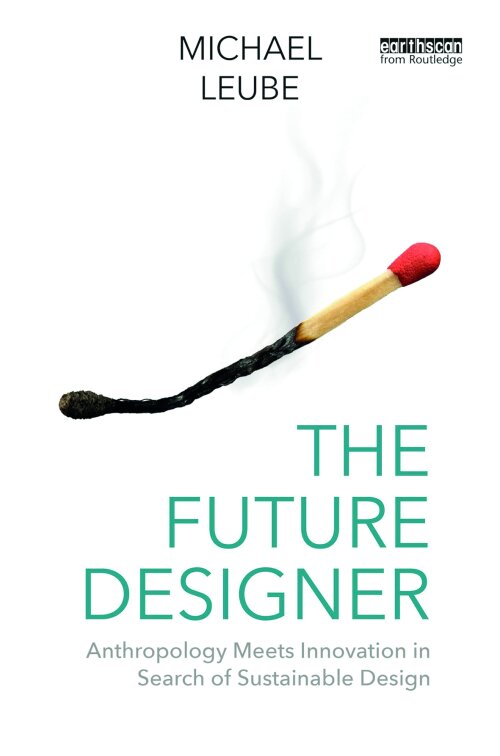
- Samuel Roux (graphic artist and visual communicator) specializes in poster art and designed the book’s cover.

Their workshops Glitter Punk and Hippie Chic (Graz, 2023) and Mindful Design (Schwäbisch Gmünd, 2024) explored impression management and radical self-identity. Together, they merge anthropology and graphic design in a pedagogy that always gives students protagonism. Short theoretical inputs lead into hands-on exploration, mediation, and consultancy. Students also conduct qualitative research, investigating real sites of inclusion and exclusion in Antwerp to develop creative interventions.
The only prerequisite is an open mind. Outcomes may include objects, posters, video, photography, installations, or models—tools to reimagine how cities can embody belonging
#17 Throwntogetherness
By Alexandra Sonnemans & Michiel Huijben
How do longing and belonging take shape in the spaces we inhabit and share? This workshop invites participants from all disciplines to approach the city itself – its buildings, thresholds, and forgotten corners – as a field of traces where desires, exclusions, and encounters are inscribed.

Working directly within the urban environment, we treat the site as a 1:1 laboratory: a space to learn from by working in it. Through walking, mapping, tracing, and constructing, participants explore how architectural elements – walls, columns, passages, ornament – can be reinterpreted and transformed into new constellations of meaning. The body is our primary instrument: to measure, to touch, to act, to imagine.

At its core, the workshop seeks to identify and test ways in which architecture can become a tool for reclaiming agency over one’s living environment. By engaging physically and imaginatively with the built world, participants develop spatial experiments that assert a sense of belonging within places often defined for us rather than by us. The workshop draws inspiration from Doreen Massey’s understanding of space as a relational field – a dynamic sphere of encounters and becoming rather than a fixed entity.
Our method uses tools and instruments from a variety of fields – including, but not limited to, architecture, visual arts and performing arts – to continuously shift between thinking, doing, and reflecting. By alternating these modes, students gain a layered understanding of space and its possibilities. The process is iterative and collective: rather than aiming for a polished end result, we build knowledge through experiments, traces, and encounters. What remains is not only the work itself, but also the visible archive of attempts, failures, and re-imaginings.
Phases:
- Exploring On-site observations, archival fragments, personal rituals and stories. Mapping visible and invisible traces of longing and belonging.
- Experimenting At 1:1 scale, students intervene through drawings, temporary structures, colours, and performative gestures. These ephemeral architectures open new ways of experiencing space.
- Anchoring The most generative experiments are further developed into a collective installation. The site becomes a palimpsest of desires and relations: both historically rooted and oriented towards futures and imaginaries.

Result:
A shared, site-specific installation: a spatial drawing of longing and belonging that is at once process, archive, and proposition. A temporary landscape where new meanings, relations, and possibilities of common space emerge.
#18 Cadavre Exquis
By Alexander Barina, Robert Saat & Felix Schaller
Belonging deals with proximity and distance, to the people we surround ourselves with, to the spaces we want to inhabit, but also to thounsands of objects.
Belonging, inclusion, and exclusion are social processes that constantly shift in form and must be negotiated both collectively and individually.

From a design perspective, we are interested in how the collective and the individual can be integrated into a creative process, and how this dichotomy of authorship might be overcome through design.

For this, we wish to borrow a method from Surrealism, the Cadavre Exquis. The uniqueness of each individual merges into yet another unique whole. Still, the whole is not a randomly assembled mixture; interfaces must be discussed and defined, boundaries drawn or dissolved. For as much as we value the individual, it often makes sense to share desires and ideas (that is, resources). One is almost tempted to recall Alexandre Dumas’ often-quoted phrase: „One for all, all for one.“

The aim of the workshop is the group creation of a cadavre exquis. The starting point will be unwanted or unsuitable objects from participants’ personal surroundings. Through continuous exchange and ongoing manual transformation, each author enriches the cadavre with new perspectives and expertise, while keeping in mind the connections to the other parts.
With this method, we aim to explore how alienated objects can once again become desirable, by learning to see them through others’ eyes and by combining newly found perspectives in a collective creation.