Wat als we kankercellen laten wegroesten
Amber Driesen: Explaining my PhD research in layman terms? That was my personal goal this autumn! By enrolling in the Popular Scientific Writing course organized by SciMingo and Eos Wetenschap
✍, I learned the tricks of the trade! Read all about my PhD research in the EOS blog 🧪: https://www.eoswetenschap.eu/amber-driesen
IJzer speelt een sleutelrol in de snelle groei van kankercellen. Datzelfde ijzer vormt tegelijk ook de zwakke schakel van een kankercel: we kunnen kankercellen laten wegroesten.


Welcome to Evelien Van Dijck’s public PhD defence on 'Identification of (epi)genetic risk factors and transcriptional driver mechanisms for obesity and metabolic dysfunction-associated steatotic liver disease'.Obesity and metabolic dysfunction-associated steatotic liver disease affect millions of people and are major public health concerns. My research investigates how our genetic code (genetics) and the way genes are switched on or off (epigenetics) contribute to these conditions. The goal is to enhance our understanding of disease mechanisms and support the development of future prevention and treatment strategies.
Supervisors: Prof. Wim Van Hul and Prof. Wim Vanden Berghe
26/05/2025 | 11AM | Campus Drie Eiken, Promotiezaal Q.002

Celebrating Women’s Achievements on International Women’s Day – March 8, 2024

As we celebrate this International Women’s Day, we’re excited to highlight the incredible women researchers of the University of Antwerp Cell Death Signaling lab, led by Prof. Wim Vanden Berghe, Prof. Tom Vanden Berghe, and Prof. Andy Wullaert. Their research explores the complex molecular mechanisms underlying cell death processes in various diseases, offering hope for therapeutic advancements in conditions ranging from cancer to neurodegenerative disorders. This new lab is a recent fusion between the ferroptosis team (led by Prof. Tom Vanden Berghe), the epigenetics team (led by Prof. Wim Vanden Berghe) and the pyroptosis team (led by Prof. Andy Wullaert).
Welcome to Claudia Theys’ public PhD defence on ‘The new epigenetic driver role of PPARα and mitochondria in metabolic dysfunction associated liver disease (MASLD), paving the way towards new therapeutics and diagnostic biomarkers’.This study showed the intricate interplay between PPARα methylation, epigenetic enzymes, and lipid metabolism in metabolic dysfunction associated liver disease (MASLD) progression. It unveils potential combination therapies and explores mitochondrial DNA methylation as promising biomarkers and therapeutic targets for this global health burden.Supervisors: Prof. Dr. Wim Vanden Berghe.
29/01/2024 | 4pm | Campus Drie Eiken, Promotiezaal, Q.002

Kunnen zebravinken ons helpen om levenslang te leren?
Je hebt meer gemeen met een zebravink dan je op het eerste zicht zou denken. Wetenschapper in de biochemie Jolien Diddens onderzocht voor haar doctoraat aan de Universiteit Antwerpen het belang van DNA-methylatie bij het sluiten van de kritische periode waarin zebravinken hun zang leren. ‘Er zijn veel gelijkenissen tussen de ontwikkeling van zang bij vinken en spraak bij mensen’, aldus Jolien Diddens.
Jolien Diddens studeerde biochemie en biotechnologie aan de Universiteit Antwerpen waar ze in 2012 haar master behaalde. Datzelfde jaar begon Jolien aan haar doctoraat in het labo van prof. Wim Vanden Berghe. In december 2023 verdedigde ze met succes haar onderzoek. Ondertussen is Jolien als wetenschapper aan de slag bij het Max Planck Institute in Duitsland.
Beluister hier ook de podcast waarin het onderzoek van Jolien Diddens wordt besproken.

Posters
Here you can find the recent posters of our group:
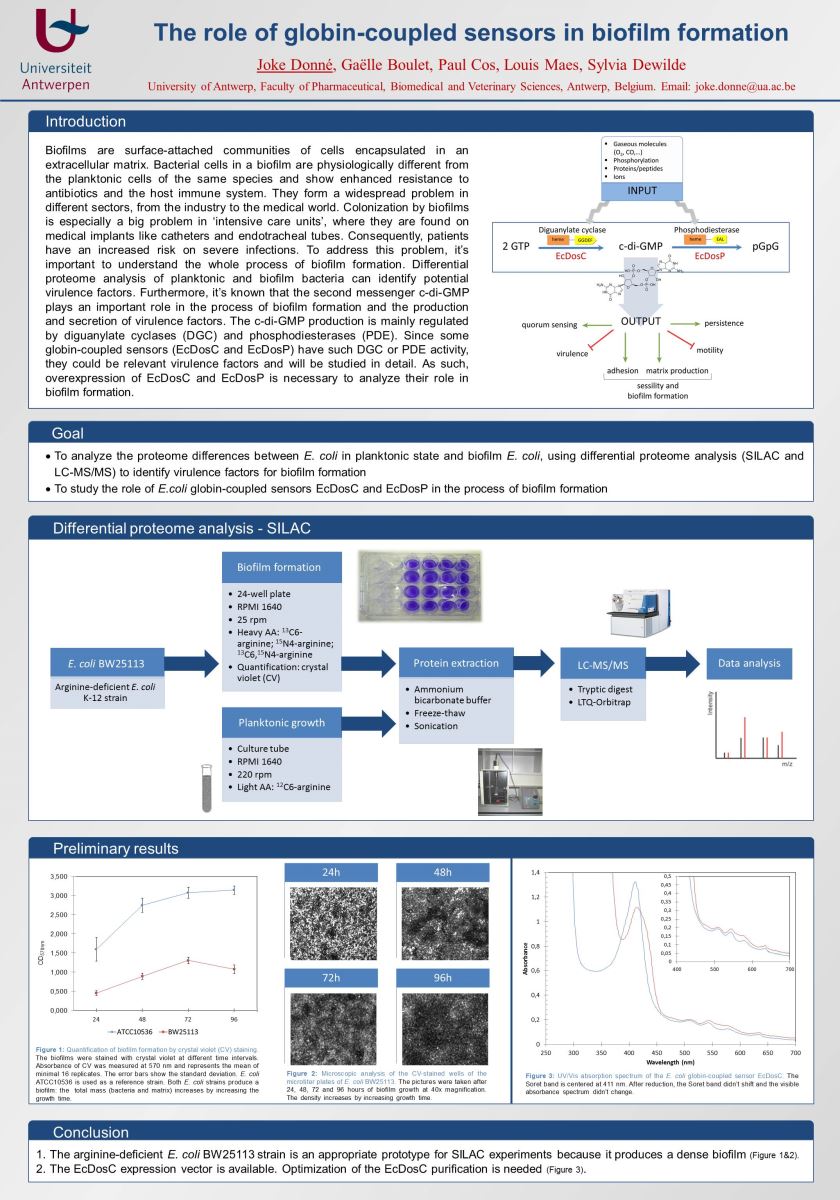
XVIII International conference on oxygen-binding and sensing proteins
july 6-10, 2014, Sheffield, UK
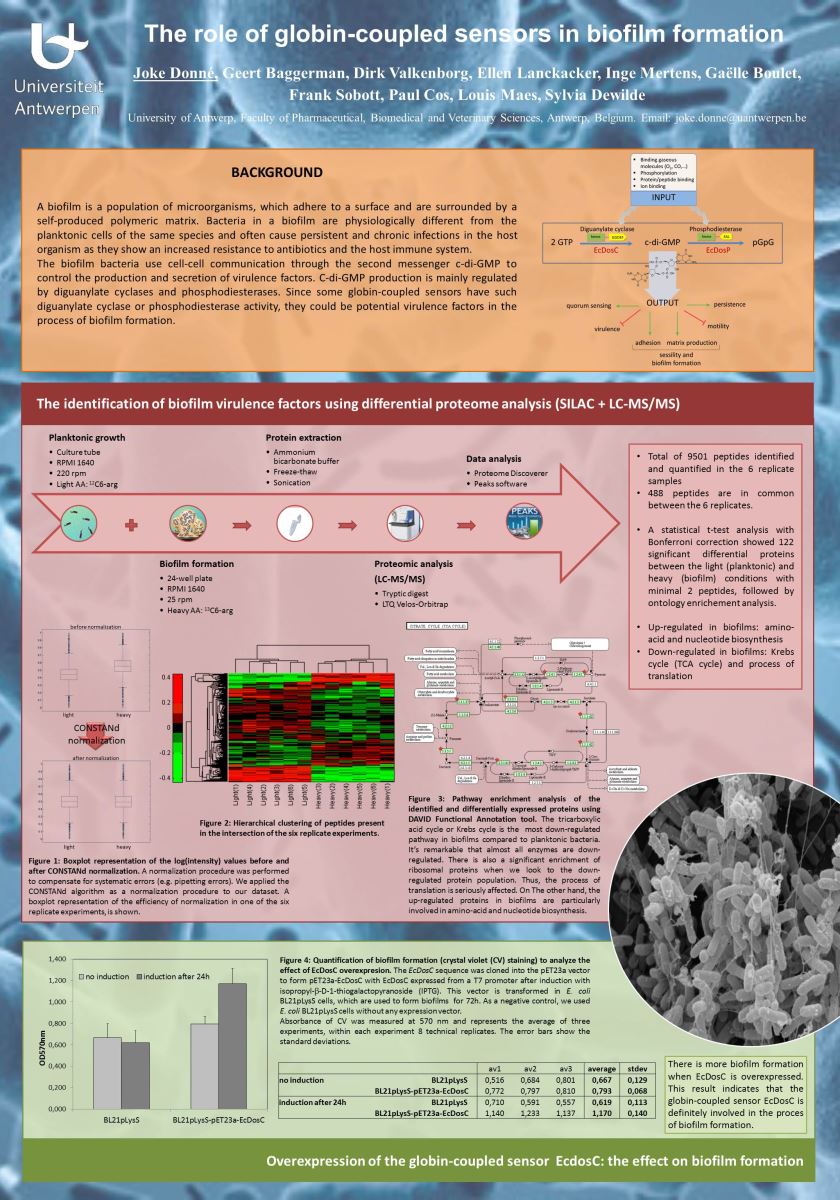
Cell Symposium "Cancer Epigenomics"
October 6-8, 2013, Sitges, Spain
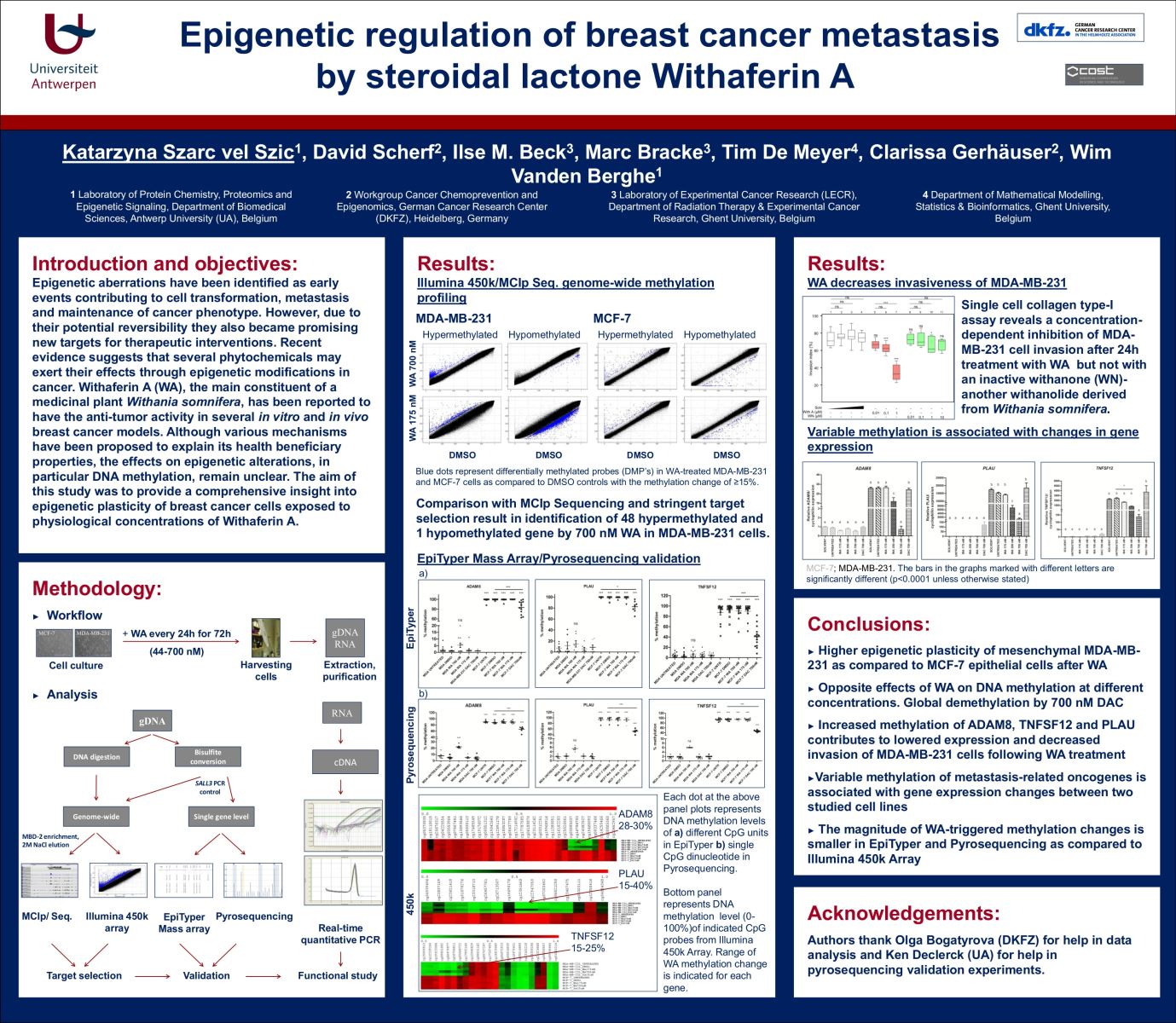
Eurobiofilms 2013 – Third European congress on microbial biofilms – basic and clinical aspects
september 9-12, 2013, Ghent, Belgium
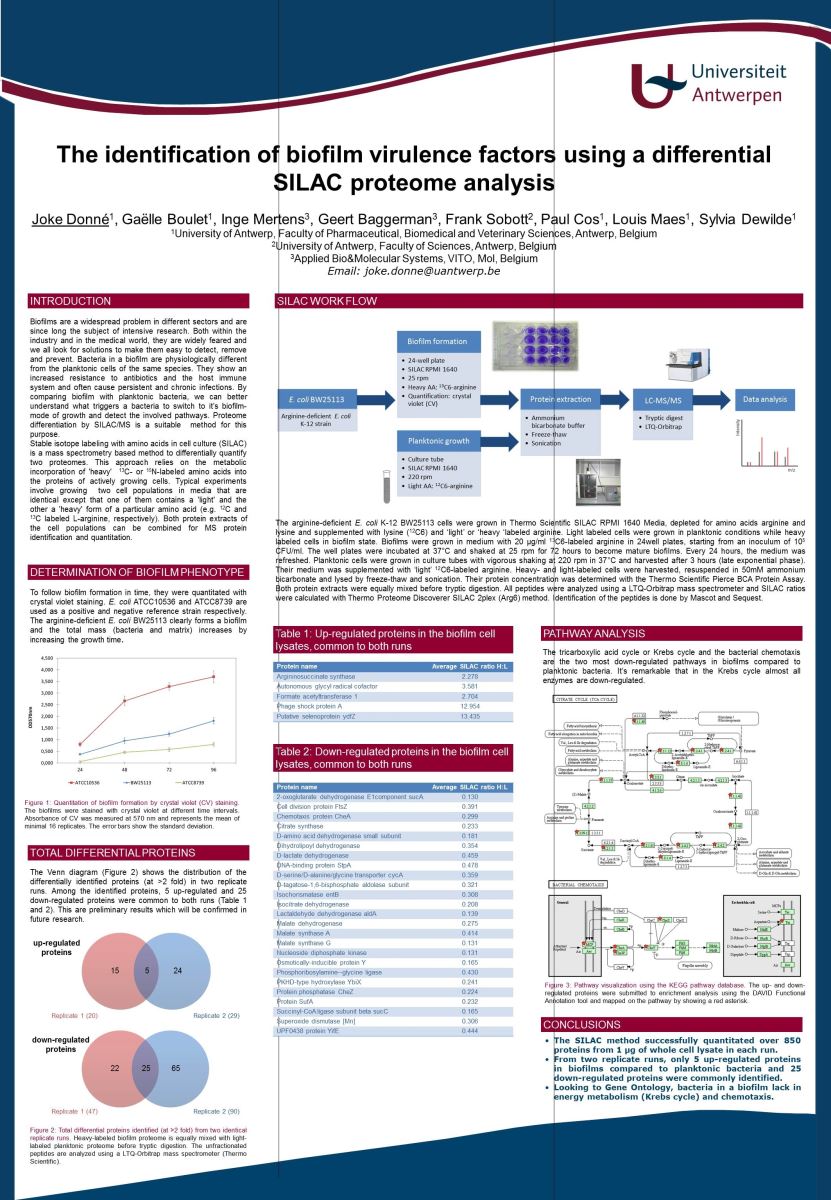
(Epi)genetics FWO-WOG program
July 3, 2013, Leuven, Belgium
genetics FWO-WOG program.JPG)
XVII International conference on oxygen binding ans sensing proteins
august 29 – september 1st, 2012, Parma, Italy