Brain Blood Clotting Process Unraveled
Research reveals why half of stroke patients don't fully recover after successful treatment
Blood Clotting Process Visualized
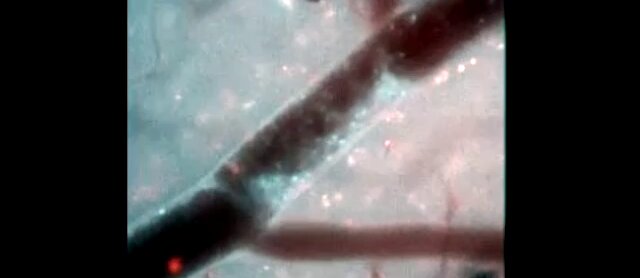
New PNAS study identifies a previously unknown clotting process in the brain after a stroke is resolved, and points to existing drugs that could help more patients recover fully.
An ischemic stroke happens when a blood clot cuts off blood flow to the brain, striking around 21,000 people worldwide every day. Thrombectomy mechanically removes the clot and restores blood flow in 9 out of 10 eligible patients. Yet even when successful, half of patients never fully recover. A new study in the Proceedings of the National Academy of Sciences (PNAS), the result of a collaborative effort in which Washington University in St. Louis played a pivotal role, now reveals why: the brain's own response to the stroke sets off a fresh wave of tiny clots that keep choking off the smallest vessels even after the main clot is gone. It also points to two existing drugs that could help. The findings arrive as the World Health Organization adopts its first-ever resolution on stroke, a global call for better prevention and care.
Watching Recovery Unfold in Real Time
Using advanced imaging, the researchers watched what happened inside the brains of mice after a stroke was treated. As in patients, the clot had been removed and blood flow to the brain restored. But the blood did not simply return in a steady, even stream. It kept reversing direction at certain junctions, and right at those spots, tiny new clots formed again and again, choking off the smaller vessels even though the original clot was long gone. This reversing flow appears to be the brain trying to protect itself, rerouting blood toward the regions that need it most, but the effort backfires, inflicting collateral damage on the very tissue it is working to save.

An Engineering Explanation for a Biological Problem
By combining biology with engineering, the team discovered why. The reversing blood flow creates strong physical forces that switch on the blood's clotting machinery. At the same time, the brain's own inflammation response shuts down the natural safeguard that normally keeps that clotting in check. Only when both happen together do new clots form: a perfect storm that inflicts further damage on the already vulnerable brain.
“Think of the stroke-affected brain like a road after a heavy snowfall,” said Dr. Frederik Denorme. “The road gets closed because it’s too dangerous to drive on, and we all assume that once the snow and ice melt it will be perfectly fine again. But the water that seeped in and froze underground has cracked the surface, leaving it full of holes and pits. So even after the snow is gone, the road still isn’t safe. The brain after a stroke can be the same: clearing the blockage and restoring blood flow doesn’t automatically make it whole again. This was always considered a possibility, but we’ve now shown it for the first time, identifying what causes the ‘cracks’ and how to prevent them, so that blood can flow normally again.”
Looking Ahead
In mice, the team has now pinned down when, where, and why these microclots form after a stroke is treated. And the study provides strong evidence that the very same process is at work in patients. The task now is to pinpoint who is most affected and exactly when the process begins in humans, so that treatment can be aimed at the right patients at the right moment. And a fix may already be sitting on the shelf: two existing drugs approved for a rare clotting disorder clear these microclots in mice. The next step is to identify which stroke patients stand to benefit, bringing the prospect of a full recovery within reach for many more.
“Now that we have a lead on what drives these microclots, we have a promising new avenue to explore for improving recovery,” said Dr. Denorme. “It’s still early days, larger studies will be needed before we know whether this can truly help patients.”
Figure. A clot-clearing drug helps the brain get its blood flow back. Both brains had the stroke-causing clot mechanically removed. The colors map blood flow through the brain: warm colors show tissue that is well supplied with blood, while cool colors show areas still starved of it. On the left, the brain received no follow-up drug, and wide regions stay blue, spots where new clots have re-blocked the smallest vessels after the original clot was gone. On the right, the brain was treated with rADAMTS13, and healthy blood flow returns across far more of the tissue.