-
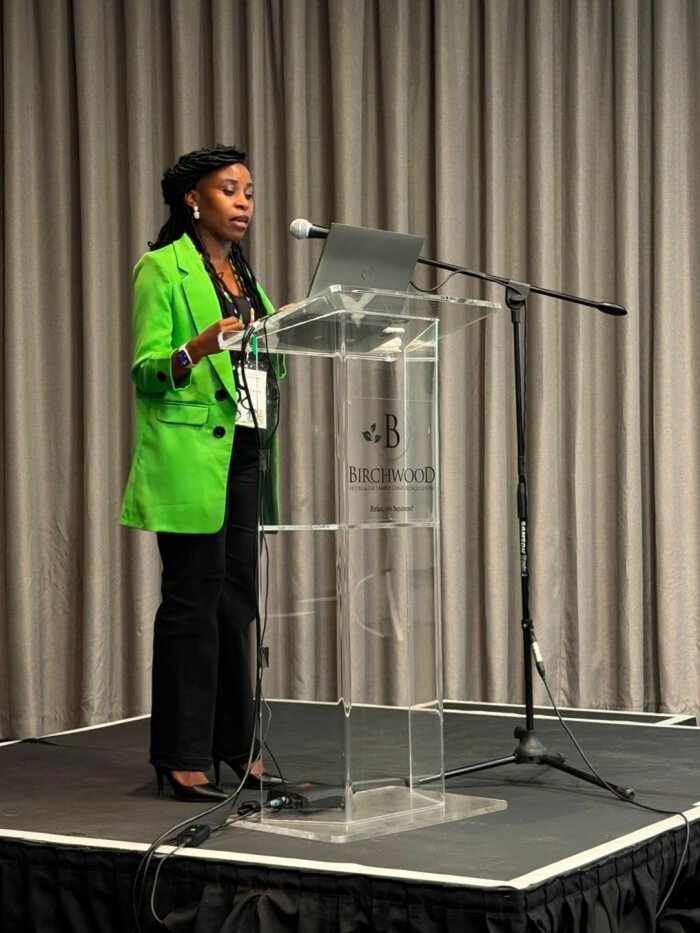 PhD student Aurélie Bisumba presenting at 18th World Congress of Bioethics in Johannesburg

When researchers provide care beyond the protocol, generally referred to as ancillary care (AC), who benefits and how much, who is left out, and what does this mean for research ethics? These are the central questions that AC in global health research forces us to confront, and the PregInPoxVac trial is no exception: beyond evaluating safety and immunogenicity of an mpox vaccine in young children, pregnant women and their infants in Boende, Democratic Republic of Congo, an AC policy is incorporated and continuously evaluated.
One of our PregInPoxVac team members, PhD student Aurélie Furaha Bisumba, presented her work on 8 July 2026 at the 18th World Congress of Bioethics, held in Johannesburg, South Africa. The congress, organised by the Steve Biko Centre for Bioethics at the University of the Witwatersrand and the Congress Africa Hosting Committee, marked the first time this prestigious biennial gathering was held on the African continent, bringing together researchers, ethicists and policymakers from over 70 countries.
Dr. Bisumba presented within Theme 6, dedicated to comforting and disturbing perspectives on research ethics and integrity. Her presentation, entitled "Implementing and Evaluating an Ancillary Care Policy for Pregnant Women and Children in an Mpox Vaccine Trial in the DRC: Comforting or Disturbing Bioethics in Global Health Research?", explored the development and early implementation of an AC policy specifically designed for these scientifically complex populations in a remote, resource-constrained setting. Dr. Bisumba showed how the policy was co-constructed through a genuinely participatory process involving community stakeholders, including focus group discussions, participatory workshops and a Community Advisory Board policy review workshop, ensuring that community priorities and concerns shaped the policy from the onset.
She highlighted both the comforting and disturbing dimensions of AC in this context, meaning what elements of the policy can provide reassurance and address important care needs, but also what aspects may raise concerns or create ethical tensions. On the comforting side, the policy fills care gaps and strengthens community trust. On the disturbing side, tensions persist around participant versus non-participant inequity, dependency risks, and the limits of any bounded policy early implementation findings, drawn from surveys, focus group discussions and interviews conducted since the trial start in June 2025, suggest good acceptability and feasibility of AC delivery, with participants genuinely appreciating the care provided. Dr. Bisumba's presentation argued that well-designed AC frameworks are not optional in global health research, they are a necessary condition for the ethical inclusion of pregnant women, postpartum women and young children in late-phase clinical trials.
-
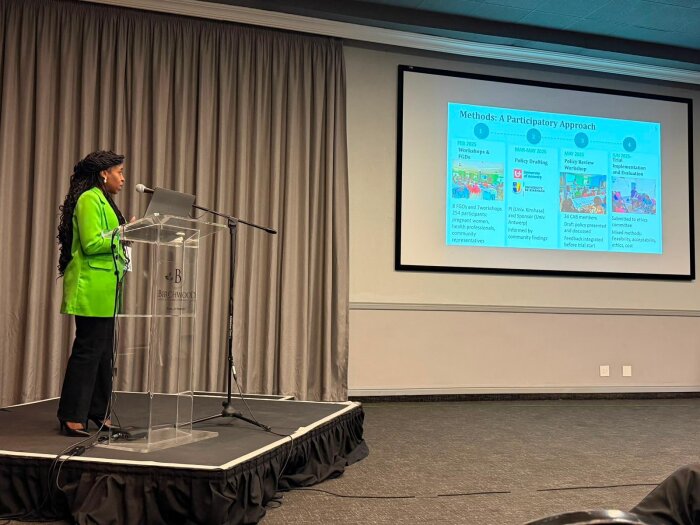 PhD student Aurélie Bisumba presenting at 18th World Congress of Bioethics in Johannesburg
