-
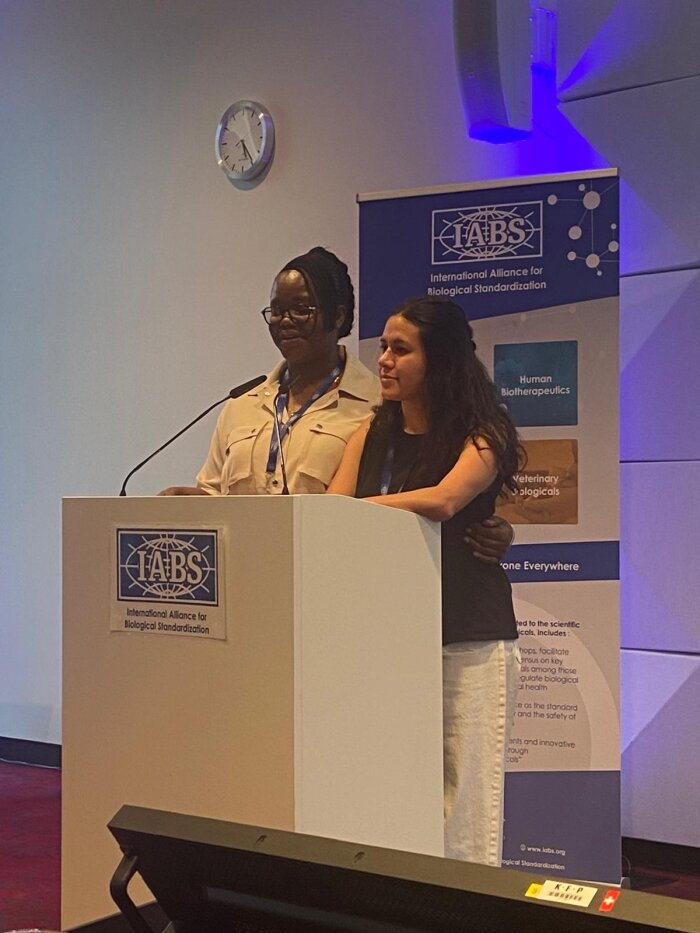 Dr. Solange Milolo and Dr. Paulina Morales Ruiz presenting together

On 8–9 June 2026, three of our very own researchers from the PregInPoxVac project presented their work at the international conference on Assessing Consequences of Maternal Immunization on Foetal Outcomes, held in Zurich, Switzerland. The meeting, organised by the International Alliance for Biological Standardization (IABS), brought together clinical and statistical experts, alongside regulatory authorities, to discuss the latest evidence on the safety and impact of vaccination during pregnancy and the future of maternal immunization research.
The presentations and panel discussions highlighted that pregnancy outcomes, such as preterm birth, are influenced by an interplay of many maternal, fetal, environmental and healthcare-related factors; rather than a single exposure. Experts also reflected on their experience with maternal immunization programmes against diseases including tetanus, pertussis, influenza, COVID-19 and RSV, but also mpox.
Against this backdrop, Dr. Paulina Morales Ruiz, MD, and Dr. Solange Milolo, MD, presented the PregInPoxVac study, one of the first clinical trials to evaluate the safety and immune response of the MVA-BN mpox vaccine in pregnant women. Conducted in the Democratic Republic of Congo, where mpox remains a significant public health concern, the study follows vaccinated mothers and their infants throughout pregnancy, at birth, and for over a year after, allowing the team to capture both immediate and longer-term safety signals. The study also examines how well the vaccine triggers the body's immune response and whether protective antibodies are passed from mothers to their babies during pregnancy or through breastfeeding. The research addresses an important gap, as mpox infection during pregnancy can lead to serious complications for both mothers and their babies. Beyond generating much-needed evidence for vaccine policy, the trial also demonstrates that maternal vaccine research is feasible even in remote, resource-limited settings through strong community engagement and investment in local healthcare capacity.
In the second PregInPoxVac presentation at the conference, Dr. Gwen Lemey, PhD, explored the ethical dimensions of conducting maternal immunization research in contexts where access to quality healthcare is limited, and delays in seeking and receiving care are common. In such environments, Ancillary Care (AC), or the care provided for health problems that are not caused by the study or the vaccine, plays a crucial role. Dr. Lemey explained how systematically incorporating AC into the design of clinical trials helps ensure that all medical events are identified and managed appropriately, whether related to the study or not, and during both planned and unplanned study visits. This approach not only strengthens ethical conduct by providing participants with care beyond the minimum study requirements but also improves the completeness and quality of safety data by ensuring that health events are more consistently recognized, managed and documented.
-
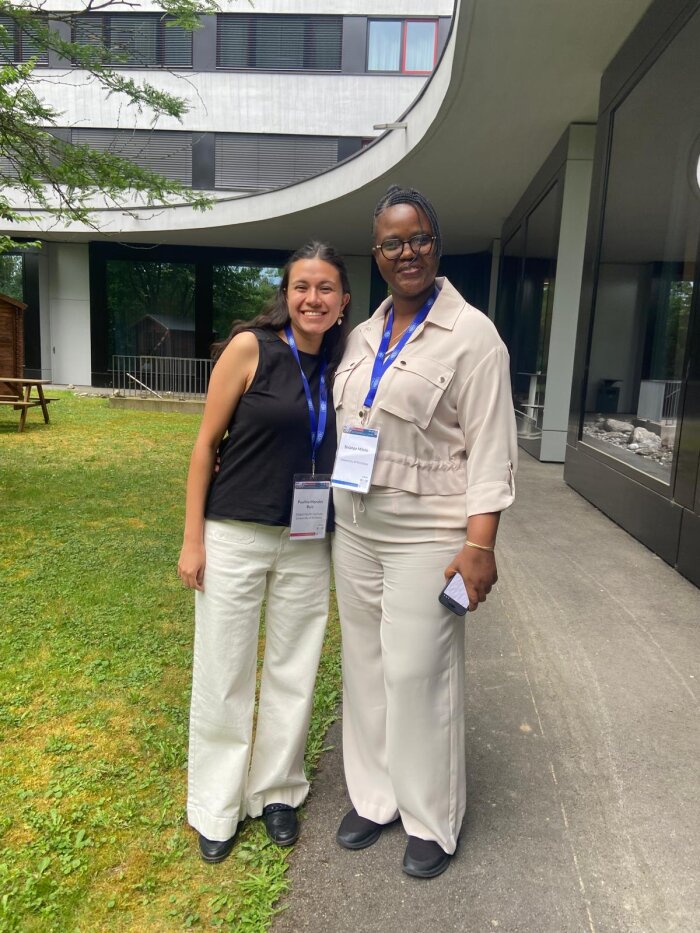 Dr. Paulina Morales Ruiz and Dr. Solange Milolo
 -
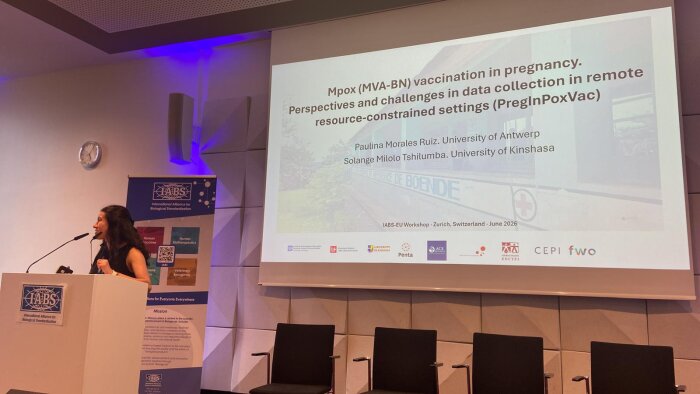 Dr. Paulina Morales Ruiz
 -
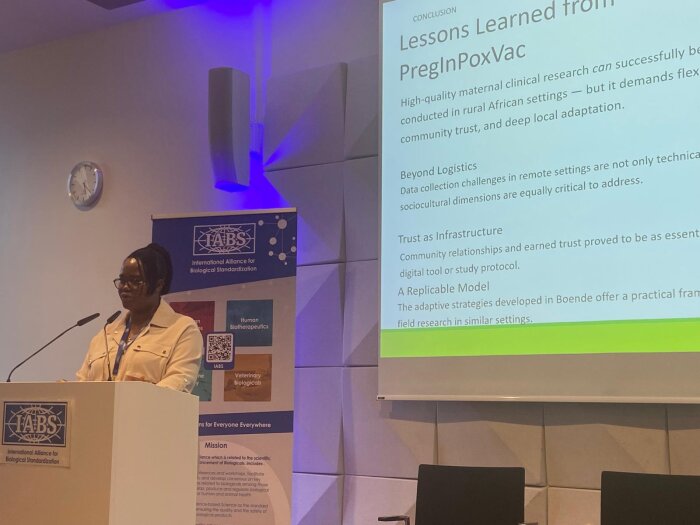 Dr. Solange Milolo


