1 July 2026, Royal Conservatoire The Hague
Initiator: Lies Colman

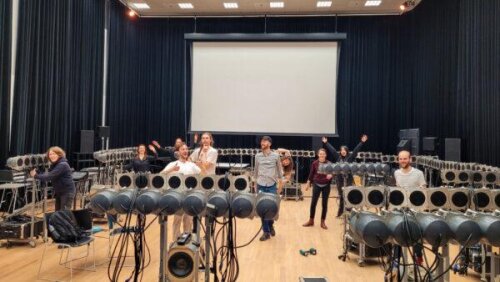
As part of her doctoral research Connecting the Dots at the Royal Conservatoire Antwerp, Lies Colman is organising a study day on the theme Creative Agency and Heritage in Contemporary Higher Music Education.
Classical music education is rooted in bodies of knowledge, traditions, practices, and repertoires that are the result of long and culturally situated processes of development to which generations of musicians, artists, and teachers have contributed. At the same time, educational institutions are challenged to continually reinterpret and critically examine this heritage, allowing it to enter into dialogue with new voices, perspectives, and practices that will, in turn, become part of the heritage of tomorrow.
During this study day, artistic researchers from a variety of backgrounds will present current research on the role and significance of heritage in contemporary higher music education. The focus extends beyond musical repertoire alone to include the processes, attitudes, pedagogical approaches, and ways of listening, creating, collaborating, and performing that are informed by the past while continually being renewed in the present.
What is the relevance of musical heritage within conservatoires and music programmes today? How can musical traditions continue to inspire the music of tomorrow? Which voices remain absent from the canon, and which emerging practices deserve greater recognition and space? And how are technological developments reshaping our relationship with both the musical past and the musical future?
This study day invites participants to reflect on the place of heritage within a rapidly changing musical landscape and on the ways in which higher music education can contribute not only to preserving musical traditions, but also to renewing and transforming them
Programme
- 09:00 – Coffee
- 09:30 – Lies Colman: Opening and provocation - Pioneering in practice: Creative agency in performance (education)
In a rapidly changing cultural landscape, musicians are called upon not only to interpret works, but also to create, transform, collaborate, and actively shape new artistic experiences. This shift challenges the hierarchical and reproduction-oriented models that have long underpinned higher music education. Yet despite widespread recognition of these changing demands, their implications for conservatoire curricula and pedagogies have only been partially embraced.
How can institutions move beyond models centred primarily on transmission and reproduction, and instead create conditions in which curiosity, experimentation, risk-taking, and creative decision-making become integral to musical training? How can performers be empowered not only as interpreters of musical heritage, but also as artistic agents capable of shaping the future of the field?
For conservatoires with a strong artistic heritage, a commitment to innovation, and a belief in the transformative role of research, these questions are becoming increasingly urgent. The time may be right to articulate and embody a more expansive vision of classical musicianship—one that honours tradition, craftsmanship, and the canon, while equipping the next generation of artists with the confidence, responsibility, and creative agency to shape the music of tomorrow. - 09:55 – Bernard Lanskey: Keynote - Currents of Change
The thought piece 'Currents of Change' was originally inspired by the AEC's Artemis explorations around what might need to be questioned if we are to strengthen the place of music in contemporary society. What began as a philosophical questioning has since become something more of a personal reckoning. Having stepped away from institutional leadership after 35 years, Bernard Lanskey is returning to the piano as the primary voice with which he seeks to add value. As such, he finds himself revisiting the essence of his undergraduate existential dilemmas, now with the lens of someone in their sixties where the surrounding world has also evolved substantially such that he wonders if we are truly 'in time' with the wider world.
The session will offer some initial provocation for collective reflection and questioning around issues of identity, time, and place. The thesis builds from the attached paper by proposing that there may be pedagogical value to our ongoing self-questioning being visible to students. As such, our artistic research may offer students inspiration of equivalent value to more traditional points of curriculum focus. Dare we share our stories? - 10:20 – Q&A Bernard Lanskey + Lies Colman
- 10:45 – Coffee break
- 11:00 – Suzan Overmeer
- 11:30 – Orsi Toldi - The Impact of General Music Education on Conservatoire Applications
- 11:45 – James Hewitt - Conversations on Musical Visualisation and Memory (Method of Loci - From Memory Technique to Creative Framework part 2)
- 12:15 – Talk with Suzan Overmeer, Orsi Toldi, James Hewitt
- 12:45 – Lunch break
- 13:45 – Joost Geevers - Who's boss?
- 14:15 – Michela Amici - Modulating on the harp
- 14:30 – Guy Livingston - Re-sounding Modernist Heritage: The Royal Conservatoire's Legacy in 20th-Century Avant-Garde Practice and its Integration into the Contemporary Piano Curriculum
- 15:00 – Talk with Joost Geevers, Michela Amici, Guy Livingston
- 15:30 – Coffee break
- 15:50 – Loes Rusch
- 16:35 – Riccardo Marogna - Bending Algorithms: Unorthodox Approaches to Digital Sound Synthesis
- 17:05 – Pepe Garcia - Live Demonstration: Sound Exploration with Found Materials
- 17:35 – Talk with Riccardo Marogna, Pepe Garcia
- 18:00 – Drinks
Practical
- Date & time: 1 July 2026, 9:30 - 18:00
- Location: Royal Conservatoire The Hague, Spuiplein 150, 2511 DG Den Haag – NL, Studio 2 and New Music Lab
- Registration: free entrance, check in at the front desk on the 4th floor
- Spoken language: English
Photo: (c) Alex Schröder